continents like seeds. La Chola Poblete, Niño de Elche, Pedro G. Romero
Within the programming of
continents like seeds. La Chola Poblete, Niño de Elche y Pedro G. Romero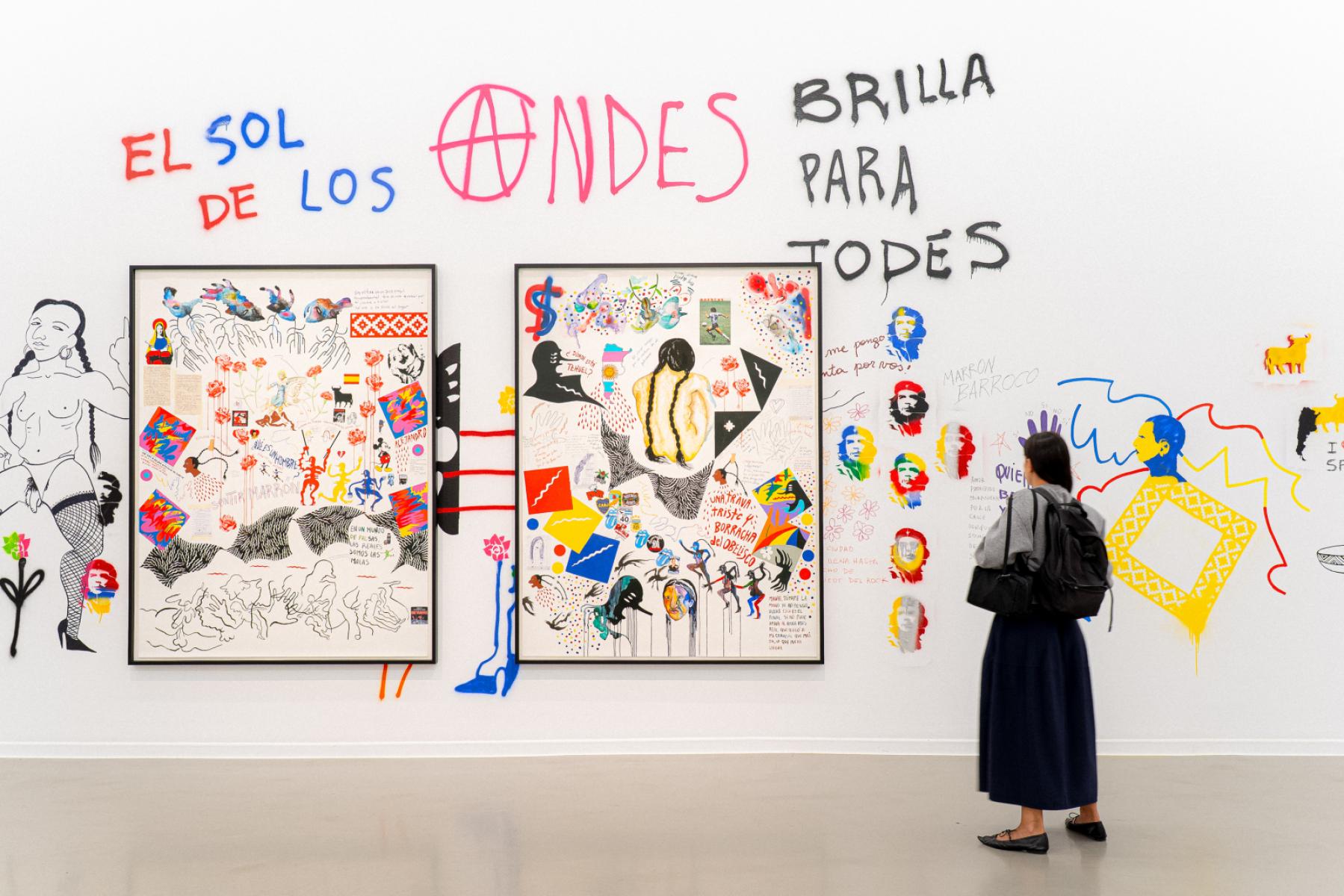

La Chola Poblete, Niño de Elche and Pedro G. Romero explore the ways in which colonial histories continue to resonate through bodies, objects and contemporary culture.
The exhibition brings together La Chola Poblete (Argentina, 1989), Niño de Elche (Spain, 1985) and Pedro G. Romero (Spain, 1964), whose practices offer new readings of colonial histories and the forms of resistance that permeate them.
Through sound, sculpture, drawing and performance, the artists explore the processes of appropriation, erasure and transformation that have shaped identities, bodies and social imaginaries on both sides of the Atlantic. Rather than offering definitive answers, their works create spaces of friction where social and cultural categories become unstable and can be reclaimed, contested or reinvented.
Through research, music and performance, Niño de Elche and Pedro G. Romero investigate the transnational histories of flamenco. Under the title Sadopítna, or Antipodes, Turned Inside Out and Upside Down (2023), their collaboration traces the connections between territories located at opposite ends of the globe forged through colonial trade routes, particularly the Manila Galleon (1565–1815), a network of exchange that linked Asia, the Americas and Europe for more than two centuries.
The work unfolds through a series of songs that follow these circuits of exchange and contamination, highlighting the networks connecting Spain, Mexico, Thailand, the Philippines, Japan, Indonesia, Aotearoa (New Zealand) and Samoa.
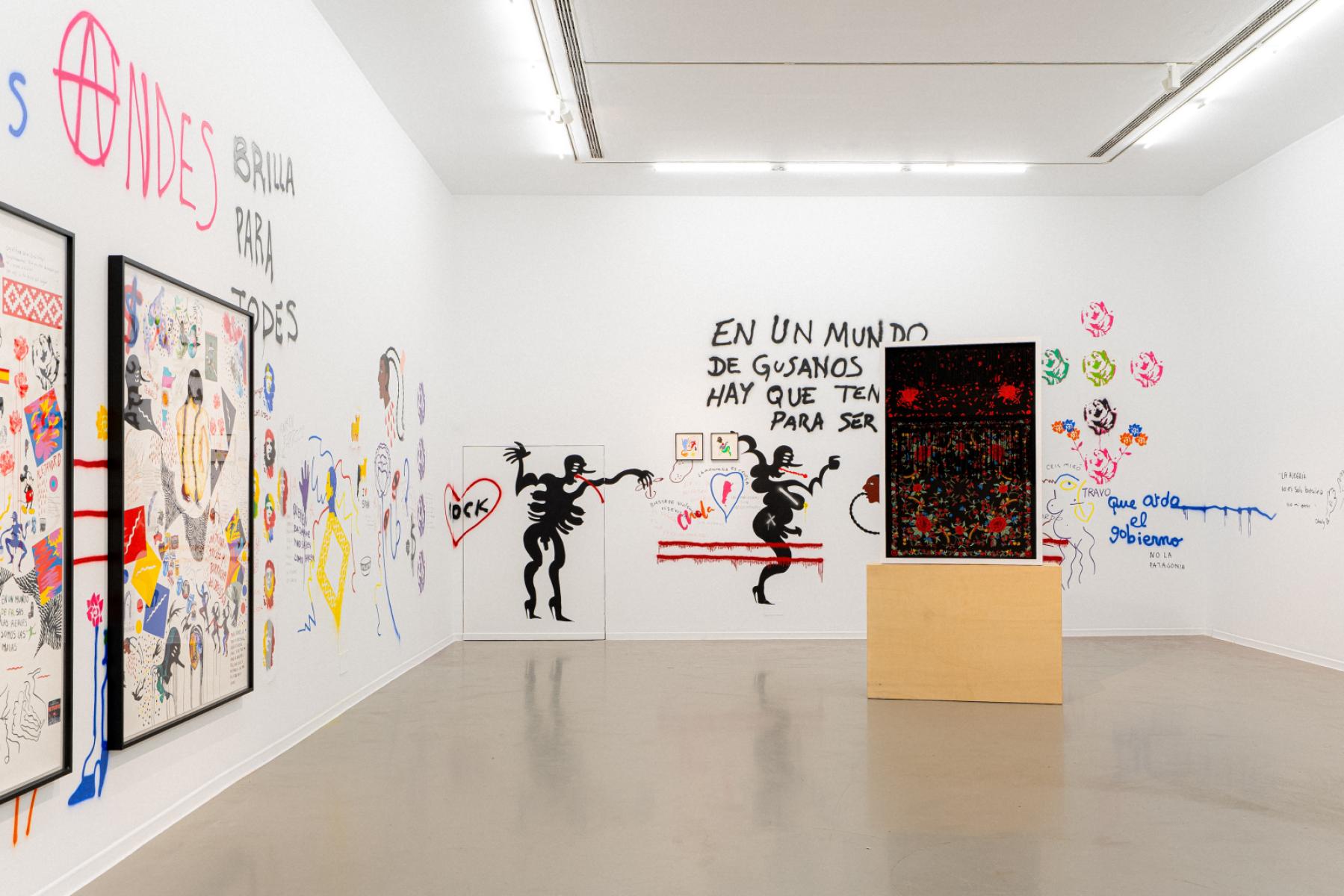
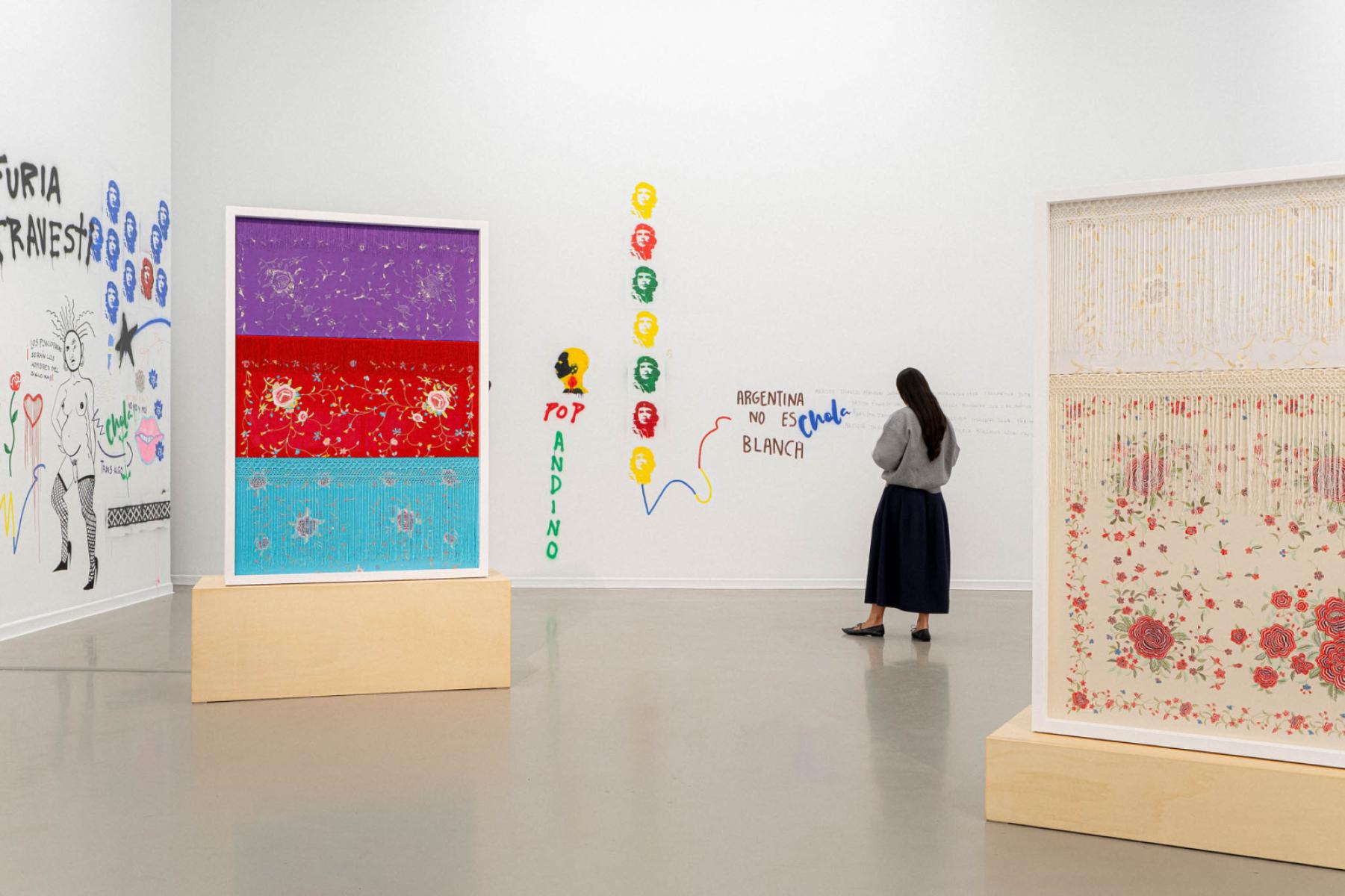
Drawing on embroidered flamenco shawls—known as mantones de Manila (Manila shawls)—Niño de Elche and Pedro G. Romero trace objects that were produced in China, sold in the Americas, used and reinterpreted in Mexico and the Philippines, and later absorbed into the visual culture of flamenco before being appropriated as symbols of “Spanish culture”.
By placing these shawls in dialogue with sound and references to Voice, Robert Morris’s 1974 minimalist sculpture, the artists expose legacies of extraction, exchange and insurgency. As a testament to flamenco’s enduring vitality, the project also extends into a programme of performances by Niño de Elche and Pedro G. Romero together with a selection of international guest artists.
While the sonic map created by Niño de Elche and Pedro G. Romero traces the reach of colonial trade, La Chola Poblete focuses on the body as a site shaped by colonial logic while simultaneously resisting it. She frequently uses her own body as both the material and the subject of her artistic practice, blurring the distinction between herself and the cultural figures she invokes.
In her drawings, matriarchal figures such as the Virgin and Pachamama—the Andean earth deity—intersect with trans subjectivities, revolutionary icons such as Che Guevara, and the logo of Quilmes, an Argentine beer whose name derives from an Indigenous word. Rooted in mestizo and Indigenous forms of knowledge, her syncretic approach invites a critical reading that honours these spiritual and cultural figures while exposing the ways in which they have been used and exploited by colonial powers.
La Chola’s practice questions how bodies are expected to behave under the systems of capitalism and patriarchy. Against this backdrop, her work evokes Argentina’s political landscape, shaped by the contradictions between nationalism, religion and consumerism. Through parody and irreverence, it destabilises dominant narratives and critiques commodity fetishism.
The practices of La Chola Poblete, Niño de Elche and Pedro G. Romero unsettle dominant narratives and bring alternative imaginaries to the surface. The energies of rupture and renewal that run through their work evoke the transnational poetics of the writer and activist June Jordan (1936–2002). Jordan’s words in Who Look at Me (1969) serve here as a guiding horizon: “New energies of darkness we / disturbed a continent / like seeds.” Taking this invitation to insurgency as its starting point, continents like seeds proposes a journey in which the echoes of colonialism are reconfigured, displaced and opened up to new possibilities of meaning.
continents like seeds is presented at La Casa Encendida following its premiere at the Center for Art, Research and Alliances (CARA) in New York in spring 2025.
Curated by Manuela Moscoso, Executive and Artistic Director of the Center for Art, Research and Alliances (CARA), New York.
Opening: 9 September, 7 pm
Guided tours and gallery attendants:
Saturdays, 12–2 pm and 5–8 pm
Sundays, 12–2 pm
In collaboration with Travesía Cuatro.